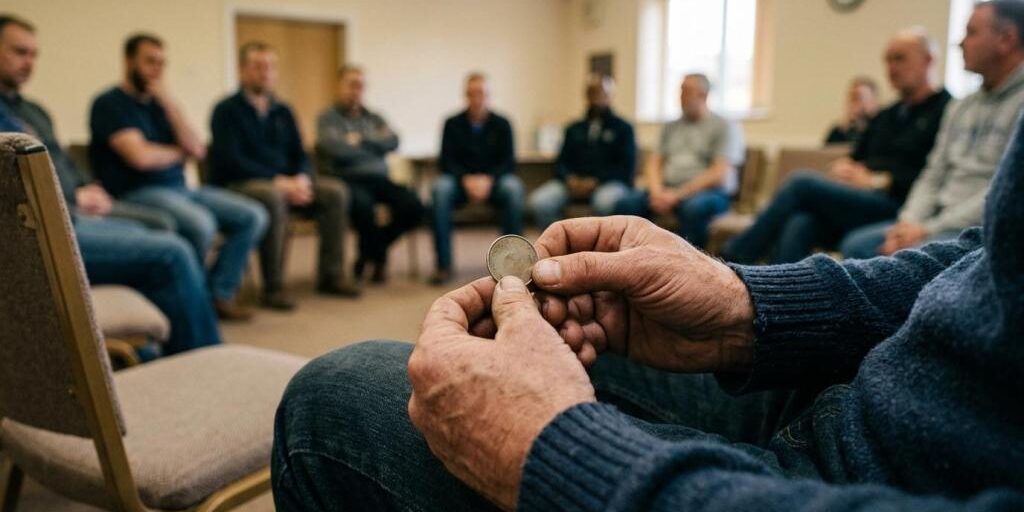
A men’s support group for recovery helps men break the patterns that keep addiction and compulsive behavior alive: secrecy, isolation, shame, and inconsistent accountability. For many men, the core problem is not lack of information; it is lack of honest community and a structure strong enough to hold change when stress rises. The right group can turn private struggle into observable recovery habits. That matters not only for sobriety, but also for trust, emotional maturity, and stability at home.
What is a men’s support group for recovery?
A men’s support group for recovery is a structured recovery setting, not a venting circle. In Sex Addicts Anonymous and church-based Zoom cohorts, men meet on a fixed cadence to replace secrecy with accountability, skill practice, and peer challenge.
Most groups center on one of five models: 12-step, therapist-led process, psychoeducational, coaching-led, or faith-based. The format matters because each model solves a slightly different problem. A 12-step meeting often emphasizes surrender, inventory, sponsorship, and fellowship. A coaching or workshop model may focus more on relapse prevention, empathy skills, boundaries, and weekly action plans.
Good groups usually share a few standards. Meetings run 60 to 90 minutes, confidentiality is explicit, attendance is regular, and members are expected to speak honestly about urges, slips, triggers, or avoidance. Common misconception: a group itself does not create recovery. The real shift happens when the group changes what a man does between meetings.
How do men’s support groups improve recovery outcomes?
Men’s support groups improve recovery by adding accountability, social reinforcement, and recovery capital. SAMHSA and Alcoholics Anonymous both treat peer connection as a practical recovery asset, not just emotional comfort.
If a man relies on willpower alone, then stress, opportunity, and old routines usually win. If he adds recurring check-ins, clear boundaries, and men who notice drift quickly, then relapse risk often drops because secrecy has fewer places to hide.
Groups also help regulate shame. Shame says, “hide until you are better.” Recovery says, “tell the truth early and act fast.” That difference is huge after a slip.
 In many programs, especially during the first 30 to 90 days, weekly meetings are the minimum and extra contact is encouraged after triggering events, travel, or conflict at home.
Pro tip: do not judge a group only by whether you feel inspired after a meeting. Judge it by whether honesty rises, excuses shrink, and your follow-through improves the next morning.
What are the best men’s support groups for recovery?
The best men’s support groups depend on fit, not hype. True Warrior Inside, Sex Addicts Anonymous, SMART Recovery, and Celebrate Recovery each serve different recovery profiles.
A strong choice matches the presenting issue, the man’s worldview, and the level of structure required. Someone dealing with pornography, compulsive sexual behavior, and partner betrayal needs a different environment than someone seeking broad emotional support after burnout or divorce.
- True Warrior Inside men’s support group: Faith Based and best fit for men addressing pornography or sex addiction while rebuilding trust through accountability, empathy training, and betrayal-trauma-aware support on Zoom or in person where available.
- Sex Addicts Anonymous: Best fit for men who want a 12-step framework, sponsor culture, and broad national meeting access for sexual behavior recovery.
- Celebrate Recovery men’s groups: Best fit for church-based recovery with spiritual language, testimony, and support for a wide range of hurts, habits, and hang-ups.
- SMART Recovery meetings: Best fit for men who prefer evidence-informed tools, self-management language, and less emphasis on lifelong identity labels.
- Therapist-led men’s process groups: Best fit for high-complexity cases, including trauma histories, dual diagnosis, or repeated relapse after self-directed efforts.
A subtle but important trade-off: the most comfortable group is not always the most effective group. If you need empathy and truth-telling around betrayal, a generic men’s group may feel easier but help less.
How do you choose the right men’s support group in 3 steps?
Choose the group by matching the problem, the method, and the structure. SAA and guided Zoom cohorts can both work, but they are not solving the same problem in the same way.
A smart selection process keeps men from joining the nearest meeting, feeling disappointed, and quitting community altogether. Recovery fit is usually visible within a month if you know what to look for.
- Match the problem to the model: If the core issue is pornography or compulsive sexual behavior, pick a sexual recovery group, not a general motivation circle. If betrayal trauma is active at home, choose a partner-sensitive group rather than one that talks only about your stress.
- Verify the structure and leadership: Ask how relapse is handled, whether attendance is expected weekly, what confidentiality rules exist, and whether the facilitator has training in addiction, trauma, or empathy work.
- Test fit for 30 days: Attend at least four meetings before judging. If honesty rises, denial gets challenged, and you leave with specific actions, stay. If the group normalizes excuses, keep looking.
Common mistake: choosing only by convenience. Time zone and commute matter, but structure matters more.
How can you prepare for your first men’s support group meeting in 3 steps?
You can prepare well in under 20 minutes. Zoom groups and Celebrate Recovery meetings both go better when a man enters with clarity, not a rehearsed performance.
Most first meetings feel awkward because men expect either a dramatic confession or instant relief. Neither is required. The goal is simple: show up honestly enough to start.
- Step 1: Define one concrete reason you are attending. Examples include stopping pornography use, getting help after discovery, rebuilding trust, or ending chronic isolation.
- Step 2: Bring facts, not a polished life story. Share your pattern, how long it has been active, what happened recently, and what you want to change.
- Step 3: Expect discomfort and stay anyway. In many healthy groups, the first win is not emotional relief. It is staying present long enough to tell the truth.
Common misconception: you need to disclose every detail on night one. You do not. A credible first step is simple honesty plus a willingness to return.
Are faith-based men’s support groups better than secular groups?
Faith-based groups are better only when the worldview and method fit the man. Celebrate Recovery and SMART Recovery can both be strong choices, but they frame change differently.
A faith-based group often helps men who connect recovery to confession, repentance, grace, spiritual disciplines, and moral responsibility. That can be especially powerful when the struggle includes pornography, secrecy, and fractured trust. Scripture and prayer can strengthen motivation, identity, and endurance.
A secular group may fit better if a man is wary of church language, has religious trauma, or wants a more clinical vocabulary around triggers, conditioning, and behavioral loops. Neither category guarantees quality. A weak faith-based group can become sentimental and vague. A weak secular group can become technically sharp but emotionally thin.
If spiritual language drives honest action, then a faith-based group may accelerate recovery. If spiritual language increases shame and hiding, then a secular or clinically led setting may be safer at first. Pro tip: ask whether the group measures actual behaviors, not just intentions.
Are online men’s support groups as effective as in-person groups?
Online men’s support groups can be highly effective, and Zoom has expanded access nationwide. In-person meetings at clinics or community centers still offer stronger physical presence and fewer hidden distractions.
The main advantage of online groups is consistency. Men in rural areas, frequent travelers, fathers with tight schedules, and men seeking privacy often attend far more reliably online than they would in person. Reliability matters because recovery is built through repetition.
In-person groups add embodiment. Men are less likely to multitask, turn cameras off, or hide behind technical friction. The room itself creates containment. That can be useful when avoidance is severe, when the man regularly lies by omission, or when emotional numbness is prominent.
If access is your bottleneck, then online is often the better choice. If presence and accountability are your bottleneck, then in-person may be stronger. A practical standard is simple: if a group is online, it should still require punctuality, camera use when appropriate, active participation, and between-session accountability.
How do you know if a men’s support group is helping recovery in 3 steps?
You know a group is helping when behavior changes, relationships stabilize, and relapse response improves. SAMHSA-style recovery tracking and empathy models like Help Her Heal both point to observable markers.
Many men stay too long in groups that feel supportive but never produce traction. Recovery should become visible in daily life, not only in meeting language.
- Track leading indicators: Measure attendance, urge intensity, device boundaries, sleep, honesty, check-ins, and completion of assigned work. A good group increases consistency before it eliminates all cravings.
- Look for relational evidence: Are you more transparent with a spouse, sponsor, or mentor? Are defensiveness and blame going down? Is empathy moving from words into repair?
- Review your relapse response: If slips are disclosed faster, shorter, and followed by action, the group is helping. If slips are hidden longer or explained away, the group is not strong enough.
Pro tip: feeling exposed is not the same as being harmed. Productive discomfort often appears before confidence does.
What red flags should men watch for in a recovery group?
Red flags are real, and they matter. Church groups, Discord communities, and local peer circles can all help, but any setting can drift into poor boundaries or weak accountability.
Healthy groups make expectations clear and challenge denial without humiliation. Unhealthy groups create confusion, dependency, or performative vulnerability. That slows recovery and can intensify harm at home.
- No clear confidentiality rule: Men are asked to trust the room without explicit boundaries.
- Anti-partner language: The group treats a hurt spouse as the main problem rather than taking betrayal seriously.
- Leader immunity: One person cannot be questioned, corrected, or held accountable.
- No relapse protocol: Slips happen, but there is no defined response plan beyond vague encouragement.
- Pressure to overshare: Members are pushed into graphic details instead of honest, relevant disclosure.
- Weak between-meeting structure: There are no check-ins, assignments, or support steps after a hard week.
Common misconception: any men’s group is better than no group. A poorly run group can normalize minimization and keep a man emotionally stuck.
How can couples benefit when one partner joins a men’s support group?
Couples benefit when the man’s group work becomes visible safety, not private self-improvement. Help Her Heal principles and structured Zoom coaching both point to the same truth: recovery must become partner-sensitive to rebuild trust.
A good men’s group helps a man move from cognitive empathy to empathy in action. That means less defensiveness, fuller disclosure where appropriate, more predictable routines, and faster repair after conflict. The partner should not have to become the probation officer.
This is where terminology matters. Sobriety means stopping the acting out behavior. Recovery includes honesty, boundaries, emotional regulation, service, and integrity under stress. If a man attends meetings but still hides devices, lies about slips, or demands quick forgiveness, the relationship often remains unsafe.
If the group teaches ownership, restitution, and practical transparency, then couples often see better stability. If the group talks only about the man’s struggle and ignores betrayal trauma, then home life may stay chaotic even when meetings are frequent. Pro tip: the strongest setup often includes a men’s group for him and separate support for her, with selective integration rather than constant monitoring.